Logo Styles: Modern, Classic, Minimal, Geometric, Monogram — When to Use Each
Have you noticed how some logos look like they could swap names with another brand, and no one would question it? And then there are logos that feel inseparable from the business they represent. You cannot imagine them belonging anywhere else. That difference rarely comes from color or typography alone. It comes from style.
Every business has a certain posture. Some stand on heritage. Some on innovation. Some on clarity. Others on personal signature. The logo style conveys that posture visually, allowing people to grasp it at a glance. When the match is right, the brand feels sure of itself. When it is off, the logo may be competent yet oddly anonymous.
Modern, classic, minimal, geometric, and monogram—each of these styles brings a different kind of character. In this guide, we look at what defines them and when each one makes the most sense for the brand behind it.
The Role of Style in Logo Design
Before you jump into specific logo styles, it helps to understand why style matters so much in visual identity. Logos are not just pretty marks. They are anchoring cues that shape people’s impression of your brand long before they encounter its products or messaging.
Research shows that a strong logo can increase brand recognition dramatically, with many consumers able to identify a business by its logo alone. In fact, a distinctive visual mark can boost recognition by up to 80%, and about 65 % of people say their first impression of a brand is based on its logo.
That matters because first impressions are powerful. Humans process visual information much faster than text, so the logo and its style serve as shorthand for what the brand stands for. A well‑chosen logo style can signal trust, clarity, and relevance; a poorly chosen one can create confusion or false expectations.
Logo Styles: Finding the Look That Speaks for Your Brand
Every logo tells a story, but the style you choose decides the voice. Choosing the right style helps your brand feel authentic the moment someone sees it.
Here is a guide on when to use each style based on current design trends.
1. Modern Logos

Modern logos are all about looking current without feeling fleeting. They strip away unnecessary ornamentation, favor clean lines, and focus on clarity. The idea is to create something that feels fresh, adaptable, and instantly recognizable across different platforms — from tiny app icons to large-scale billboards.
Unlike decorative or overly detailed logos, modern designs communicate efficiency, confidence, and forward-thinking values, making them especially popular with brands that want to be seen as innovative or trend-conscious.
When to Use
Modern logos work best for brands that want to convey progressiveness and adaptability. Tech startups, digital-first companies, fashion labels, and lifestyle brands often turn to modern logos because they project a sense of being “on the cutting edge” while remaining clean and versatile enough for various media. If your goal is to stand out in a competitive market or signal that your business evolves with the times, a modern logo can be the visual shorthand for that message.
Key Traits of Modern Logos
- Simple, uncluttered shapes and lines – Modern logos strip away anything unnecessary. Every curve and angle has a purpose, making the design easy to process and remember. This simplicity also ensures the logo doesn’t get lost in cluttered spaces or when scaled down.
- Sans-serif typography – Clean, sans-serif fonts are a staple of modern design. They feel sleek, approachable, and readable across digital screens, avoiding the decorative flourishes of serif fonts that can make a logo feel dated.
- Minimal or flat color palettes – Modern logos often rely on one or two colors, sometimes flat without gradients or textures. This minimalist approach keeps the focus on the logo’s shape and concept while making it adaptable across media.
- Flexible for both digital and print – A modern logo is designed to work anywhere, from tiny app icons to large-format signage. Its geometry and simplicity allow it to remain recognizable and maintain impact across all sizes and platforms.
- Emphasis on readability and instant recognition – Every element in a modern logo serves clarity. Whether it’s the symbol, type, or layout, it’s designed so that people can identify the brand immediately, even at a glance. This makes modern logos highly effective in fast-paced digital environments.
Best For
Companies that need to stand out in fast-moving markets, appeal to younger or tech-savvy audiences, and ensure their branding adapts seamlessly across websites, apps, social media, and other platforms.
Modern Logo Inspirations
- Apple – The logo is instantly recognizable and relies on a simple, iconic shape without text. Its smooth curves and monochrome palette make it adaptable for all mediums, from devices to packaging, embodying modernity through clarity and elegance.

- Spotify – The music logo uses clean, flat lines and a vibrant green that stands out on digital screens. Its simplicity ensures recognition whether it’s on a phone app or a billboard, highlighting the brand’s digital-first nature.
Airbnb – The “Bélo” symbol is abstract yet approachable, combining smooth curves with minimal detailing. It communicates community and belonging in a sleek, modern form that works across apps, websites, and print.
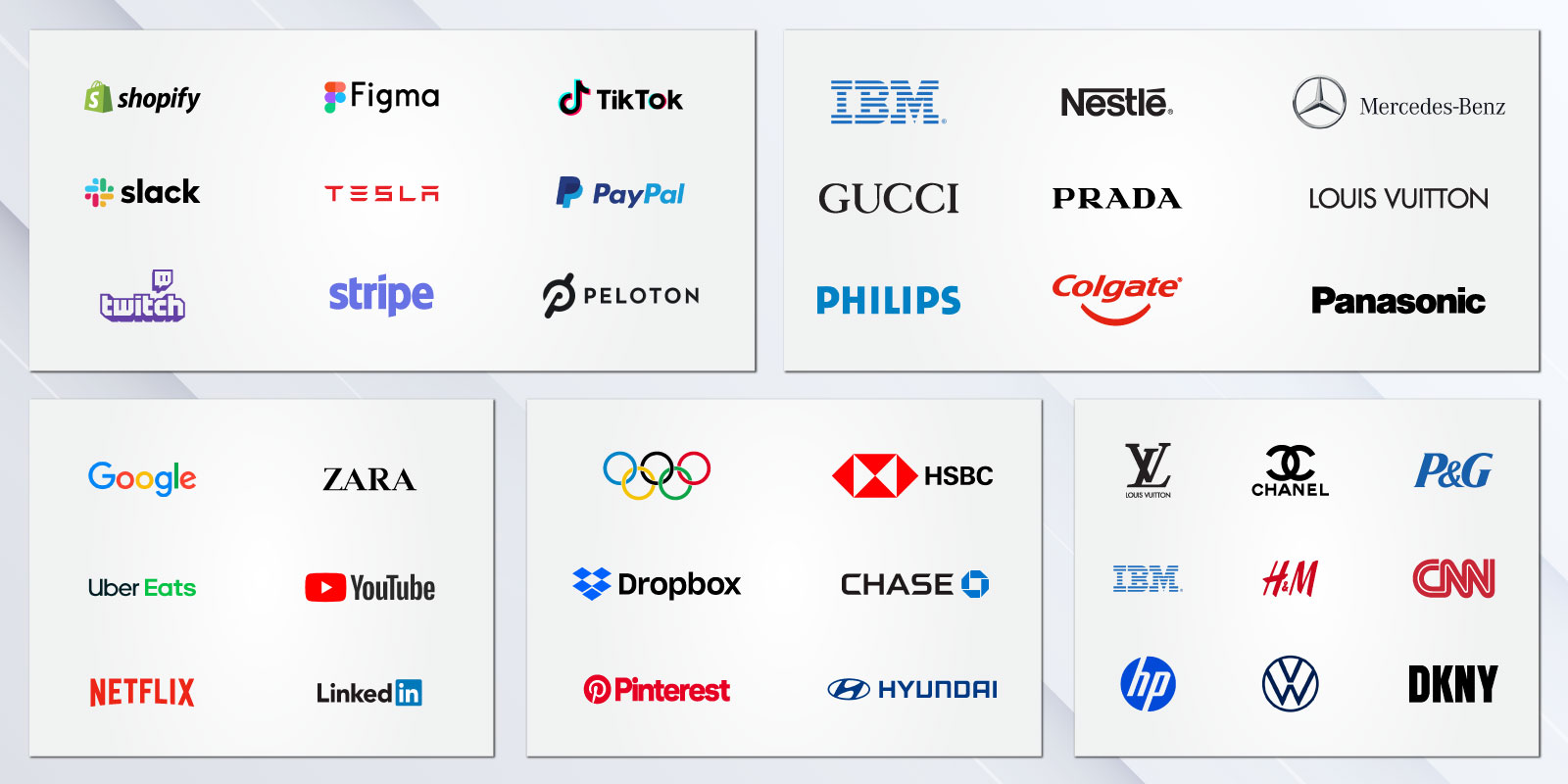
Dropbox – Dropbox moved from a literal box to a geometric, minimalist icon that emphasizes digital storage and simplicity. Its logo is clean, flexible, and instantly identifiable, reflecting modern design values.
- Google – The wordmark is modern because of its flat, sans-serif typeface and primary color palette. The design is straightforward, adaptable, and instantly legible across countless devices, embodying accessibility and clarity.
2. Classic (Traditional) Logos
Classic logos are rooted in tradition and timelessness. They evoke stability, authority, and a sense of heritage, signaling that the brand has stood the test of time or operates with a refined, trustworthy approach. These logos often feel familiar and grounded, using design elements that have a history of conveying quality and reliability.
Unlike modern or industry’s trendy logos, classic logos prioritize elegance and continuity over the latest design fads, making them ideal for businesses that want to communicate credibility and sophistication.
When to Use
Classic logos are best suited for brands that want to signal trust, experience, and reliability. Luxury brands, financial institutions, law firms, and long-established businesses often turn to classic styling to reflect their heritage and professionalism. If your goal is to convey that your business is steady, respected, and built to last, a classic logo can immediately communicate that message to your audience.
Key Traits of Classic Logos
- Serif fonts (e.g., Times New Roman, Didot) – Serif typefaces convey tradition, authority, and professionalism. Their small decorative strokes give a sense of elegance and formality that communicates trustworthiness, while remaining highly readable across fonts for digital and print applications.
- Detailed emblems and symbols – Classic logos often include crests, shields, or intricate shapes that suggest history and craftsmanship, creating a sense of depth and legacy.
- Timeless, conservative designs – These logos avoid passing fads, favoring shapes, layouts, and colors that have endured over decades, ensuring the logo won’t feel outdated quickly.
- Muted or restrained color palettes – Traditional logos often rely on deep, classic colors like navy, black, gold, or burgundy, reinforcing sophistication and stability.
- Balanced composition for readability – Even with detailed emblems, classic logos maintain careful balance so they remain legible across print and digital mediums.
Best For
Classic logos are ideal for brands that want to project stability, heritage, and credibility. They work particularly well for luxury labels, law firms, financial institutions, universities, and any business with a long-standing history or a story to tell. By using timeless design elements, these logos convey professionalism and authority.
Classic Logo Inspirations
- Mercedes-Benz – The three-pointed star in a circle is a timeless emblem representing quality, engineering excellence, and global recognition. Its geometric symmetry and restrained color palette exude professionalism and heritage.
- Vogue – The Vogue wordmark uses a high-contrast serif typeface that feels elegant, sophisticated, and rooted in fashion tradition. Its simplicity, paired with a refined font, communicates authority and style.
- Harvard University – The shield and Latin motto immediately signal history, trust, and academic prestige. The emblematic design creates a sense of tradition that has endured for centuries.
- Tiffany & Co. – The wordmark and iconic robin’s egg blue convey luxury, refinement, and timeless appeal. The serif typeface adds a touch of elegance that aligns with its heritage as a premium brand.

- The New York Times – Its blackletter typeface communicates history, credibility, and authority. The classic style reflects the newspaper’s longstanding reputation and commitment to journalistic tradition.
3. Minimalist Logos
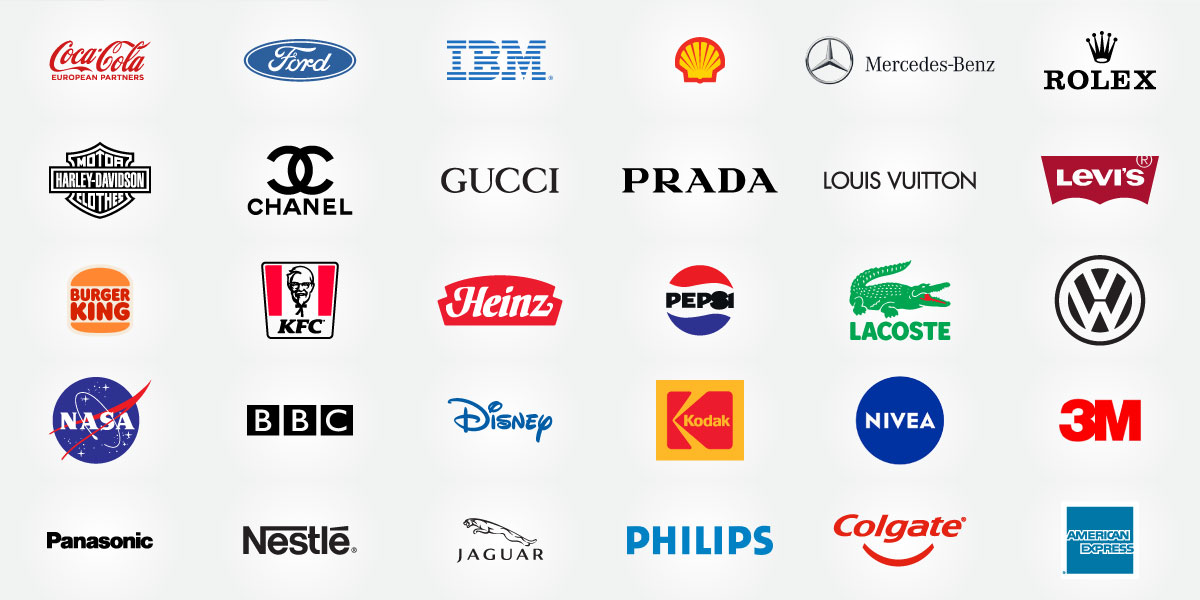
Minimalist logos conveys the principle of “less is more.” They reduce a brand’s visual identity to its most essential elements, removing anything unnecessary so the logo is immediately recognizable and versatile. The focus is on clarity, simplicity, and balance, allowing the logo to communicate the brand’s personality without relying on complex graphics, textures, or elaborate typography.
Minimalist logos for startups and famous businesses feel clean, modern, and timeless. They prove that stripping down to the essentials can make a brand more powerful, versatile, and instantly visible across all platforms.
When to Use
Minimalist logos are ideal for brands seeking to appear modern, sophisticated, and uncluttered. They are especially popular in tech, wellness, fashion, and lifestyle industries, where a simple, elegant mark can convey confidence and professionalism. These logos work well for companies that want their identity to feel contemporary and easily digestible in fast-moving digital environments.
Key Traits of Minimalist Logos
- One or two colors – Minimalist logos rely on restrained palettes to keep the focus on shape and form rather than color complexity.
- Clean lines and shapes – Simple geometry and straight or gently curved lines give the logo a polished, uncluttered feel.
- Plenty of white space – Space around the elements ensures the design “breathes” and improves legibility across sizes.
- Often no text at all – Many minimalist logos rely solely on a strong icon or mark, reducing reliance on a typographic logo while boosting instant recognition.
- Timeless and versatile – Designed to remain relevant for years, minimalist logos translate well across digital screens, print, and merchandise.
Best For
Brands that need to remain recognizable on small screens, such as app icons or favicons, and those that want a timeless, ageless aesthetic. Minimalist logos are ideal for modern, clean, and sophisticated brands that help them communicate professionalism and clarity without visual clutter.
Minimalist Logo Inspirations
- Nike – The Swoosh is a perfect example of minimalist design. It’s simple, fluid curve conveys motion and energy, while its single-color execution ensures versatility and instant recognition worldwide.
- FedEx – The logo uses clean, sans-serif typography and a clever hidden arrow in the negative space to convey precision and speed. Its simplicity makes it highly legible across digital and print platforms.
- Adidas – The three-stripe icon is a minimalist representation of performance and movement. It works across shoes, apparel, and marketing materials without needing text, exemplifying adaptability.
- Mastercard – The overlapping red and yellow circles reduce the brand identity to a simple, iconic mark. Minimal colors and clean geometry make it instantly recognizable globally.
- Target – The concentric red circles are bold yet extremely simple. This minimalist symbol communicates focus and clarity, making it one of the most memorable retail logos worldwide.
4. Geometric Logos
Geometric logos are built on the power of shapes. By using basic forms like circles, squares, and triangles, these logos create a sense of structure, balance, and precision. The simplicity of geometry allows the brand mark to feel deliberate and organized, communicating reliability and confidence even at a glance.
Unlike purely abstract designs, geometric logos often rely on symmetry and proportion to give a sense of harmony and visual stability. They can also convey motion or energy depending on the shapes used, making them versatile for both traditional and innovative brands.
When to Use
Geometric logos work best for industries that value precision, order, and structural clarity. Construction firms, tech companies, finance institutions, and engineering brands often choose geometric designs to communicate trust, accuracy, and professionalism. They are particularly effective for brands that want to look modern while maintaining a sense of solidity and reliability.
Key Traits of Geometric Logos
- Mathematical precision – Shapes are carefully measured and proportioned, giving the logo a clean, intentional feel.
- Symmetry and balance – Balanced compositions enhance harmony and make the logo feel dependable.
- Clean, sharp angles – Triangles, squares, and other angular forms can communicate stability, speed, or innovation depending on usage.
- Simplicity with meaning – Even minimal shapes convey clear concepts, such as circles for unity, squares for reliability, and triangles for motion or progress.
- Versatile for multiple mediums – The strong geometric foundation ensures the logo works well in digital, print, and scaled-down applications.
Best For
Geometric logos are ideal for brands that want to communicate reliability, structure, or innovation. Squares often signal stability and trust, circles suggest unity and inclusivity, while triangles can imply speed, motion, or forward-thinking innovation. These logos are particularly effective for industries such as technology, construction, finance, and logistics, where precision and clarity are highly valued.
Geometric Logo Inspirations
- Microsoft – The four squares of Microsoft’s logo represent structure, order, and versatility. Its simple geometric design communicates reliability while remaining modern and adaptable across products and platforms.
- Delta Airlines – The triangle logo shape evokes motion, speed, and direction, perfectly reflecting an airline’s focus on travel and innovation. Its clean geometric lines keep the design bold and instantly recognizable.
- Adobe – Adobe’s “A” is formed using sharp angles and simple geometric lines, signaling creativity, precision, and digital innovation. Its strong, minimalist geometry ensures adaptability across digital and print media.
- Toyota – The overlapping ovals create symmetry and balance while forming a recognizable mark. Its geometric construction gives a sense of reliability, unity, and global reach.
- Mitsubishi – The three diamonds combine sharp angles with symmetry to communicate stability, precision, and strength, reflecting the engineering and industrial expertise behind the brand.
5. Monogram (Lettermark) Logos
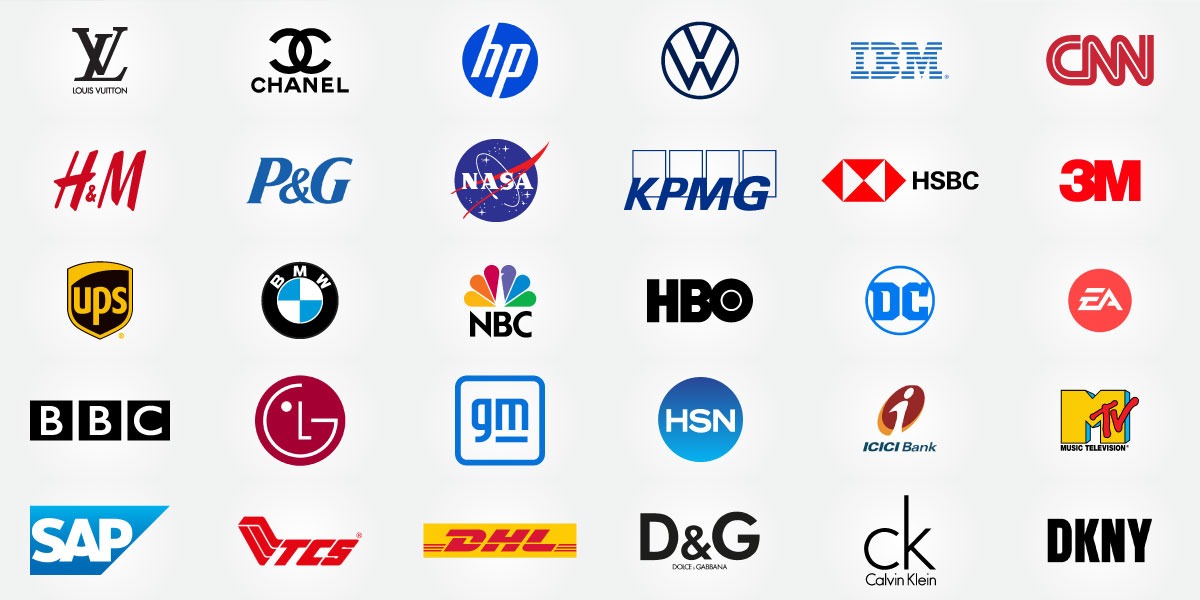
Monogram logos, also called lettermarks, turn a company’s initials into a sleek, compact, and memorable visual identity. Instead of using the full brand name, these logos focus on one, two, or three letters to create a strong, recognizable mark. By distilling the identity into letters, monogram logos make complex or lengthy names easy to recall while giving the brand a polished, professional appearance.
They often incorporate clever typography, interlocking letters, or subtle embellishments to convey sophistication and style, making them a favorite among fashion, luxury, and corporate brands.
When to Use
Monogram logos are ideal for companies with long or complicated names that need faster recognition. They work especially well when the brand wants to appear high-end, professional, and memorable, without crowding the design with excessive text. Monograms are perfect for businesses that want a compact logo that adapts seamlessly across different media while maintaining elegance.
Key Traits of Monogram Logos
- One, two, or three letters – Focused on initials to simplify the brand identity and boost memorability.
- Stylized or interwoven typography – Letters are often creatively connected, layered, or customized to form a cohesive mark.
- Clean and compact design – Minimal space is used without losing clarity, making the logo highly versatile.
- Timeless appeal – Lettermarks often use classic typefaces or subtle embellishments, ensuring longevity.
- Scalable across mediums – Works equally well on business cards, websites, signage, or merchandise.
Best For
Monogram logos are ideal for creating a high-end, sophisticated feel. They are particularly popular in fashion, luxury, and corporate sectors where brand prestige matters, but quick recognition is essential. These logos help long, or complex names become instantly memorable and adaptable, giving companies a professional edge in crowded markets.
Monogram Logo Inspirations
- IBM – The bold, striped letters convey strength, innovation, and authority. Its simple yet distinct typography makes it immediately recognizable worldwide.
- H&M – The interlinked letters of H&M create a compact, clean mark that is stylish and approachable, perfectly fitting its fashion-forward identity.
- CNN – The connected red letters form a sleek, unified mark that communicates speed and reliability, ideal for a global news network.
- Louis Vuitton – The iconic LV monogram combines elegance and tradition, reflecting the luxury and heritage of the brand. Its stylized letters work seamlessly on products, packaging, and advertising.
- Chanel – The interlocking C’s form a simple yet luxurious symbol that conveys sophistication, timelessness, and high-fashion credibility. Its minimalist design allows it to shine across digital, print, and product branding.
Quick Guide: Choosing the Right Logo Style
Not sure which logo style fits your brand? This table breaks it down at a glance. It pairs each style with the industries, vibes, and real-world examples where it works best, making it easier to see which approach will communicate your brand’s personality effectively.
| Style | Best For | Brand Vibe | Example |
| Modern | Startups, Tech, Lifestyle | Trendy, Innovative | Airbnb, Spotify |
| Classic | Finance, Law, Luxury | Trustworthy, Established | Vogue, The New York Times |
| Minimal | Tech, Skincare, Fashion | Clean, Sophisticated | Mastercard, Nike |
| Geometric | Engineering, Tech, Banking | Stable, Precise | Microsoft, Delta Airlines |
| Monogram | Fashion, Long Company Names | Professional, Sophisticated | IBM, H&M |
This table gives a clear snapshot so you can quickly see which style aligns with your brand’s personality, industry, and audience expectations.
Final Considerations for Choosing a Logo Style
Deciding on a logo style? Here are some key factors to keep in mind:
• Target Audience
Think about who will see your logo first. Are you appealing to a younger, tech-savvy crowd that responds to sleek, modern designs? Or are your clients more mature and expect a sense of heritage and trust, making classic styles a better fit? Your audience should guide the overall tone of your logo.
• Adaptability
Consider where your logo will appear. Does it need to remain recognizable as a tiny app icon or favicon (perfect for minimal designs)? Or will it be displayed in larger, detailed formats like embroidered uniforms or signage, where a classic or monogram logo might shine? A versatile logo ensures your brand is consistent across all mediums.
• Brand Personality
Your logo should reflect who your brand is. Is it fun, playful, or approachable, where a memorable brand mascot or minimal design works best? Or is it serious, professional, and authoritative, calling for a geometric or monogram style? Matching style to personality ensures the logo communicates the right impression.
To Sum Up
Choosing the right logo style sets the tone for your entire brand. It’s more than just a mark—it communicates personality, values, and professionalism at a glance. Don’t leave it to chance. Launch a logo contest or hire a professional designer to create a distinctive, memorable logo that perfectly fits your audience, industry, and brand story.