10 Sites to Help You Become an Expert in Website Development
Featured Image: freepik.com/vectorjuice
Take it from the data that speaks volumes! Approximately 76% of consumers evaluate the credibility of a company based on its website design, functionality, and user friendliness. This shows that web development is not just about technical skills; it is a career-defining skill that you must learn. Whether it’s writing HTML tags, working with a JavaScript framework, or implementing backend features like html to pdf c# conversion, web development is a versatile field that merges logic, creativity, and innovation.
Thankfully, you do not need a college degree or a big budget to become a skilled developer. You just need an internet connection and access to the right teaching platforms. With so many options, how do you choose the best ones that level up your skills?
According to a survey, more than 70% of the developers say that they are at least partially self-taught. Doesn’t matter if you have a degree or not; you must have a strong grip on the fundamentals, like improving the usability of your website.
In this article, we will break down 10 of the most trusted online resources to learn web development that even the top developers vouch for. Since a tool set is not complete without reference libraries, code challenges, or design inspiration, we have also included features that make each platform stand out from the others on our list.
So, you can bookmark the sites you find useful and keep visiting them for daily practice!
1. Codecademy

Image Source: Codecademy.com
This is a great website for gaining knowledge on web design and advanced development as well. You can find various courses and resources for beginners or professionals on HTML, CSS, and UI/UX. Signing up for Codecademy could make it a lot easier for you to design a responsive and easy-to-navigate website. Browse through the various materials and start your learning process from the beginning.
Important features:
- Guided learning path, such as “Front-end Engineer,” “Back-end Engineer,” or “Full-Stack Developer”.
- Easy to learn, short and interactive lessons that focus on problem solving and applications in the real world.
- Codecademy also offers a “Pro Plan with projects and quizzes that help developers build their portfolio as they go through each lesson.
Example of Use Case:
Imagine you want to create a portfolio website. Codecademy moves you throughout the process, from the creation of a responsive landing page to adding interactions with JavaScript. The platform also explains why some coding practices are more effective than others, which can help you speed up the learning process.
2. WebFlow University

Image Source: university.webflow.com
You can easily follow all the instructions and improve your skills in a short time.
Important features:
- Free training on Webflow CMS, e-commerce platform and responsive web design, animation, search engine optimizaiton, and content strategy.
- It comes with hours of video tutorials that simplify the web design process and make it easier for developers to incorporate different features in landing pages.
- Emphasis on no-code and low-code development, which is perfect for designers focused on web development.
Example of Use Case:
Freelancers often use Webflow online tools to create an interactive website for clients, without writing CSS animations or media queries manually. For example, a freelance designer can build a web store page with Webflow, combine interactive elements such as sliders to showcase catalogs and create the design without heavy coding.
3. FreeCodeCamp

Image Source: FreeCodeCamp.org
You can learn the basics and gain advanced knowledge about web design by signing up for the course. From visual design to accessibility, people can gain technical expertise on creating portfolio websites, surveys or forms and product listings.
Important features:
- More than 6,000 training programs that cover everything from basic web design to back-end API.
- Free Code Camp gives Certifications in Responsive Web Design, Front-End Libraries, Full-Stack Development and Data Visualization.
- Great opportunity for networking as it has a large global community of coders that share their experiences and projects.
Example of Use Case:
You can complete certification projects like Responsive Web Design, which will help you create a personal portfolio or a tribute page. These projects can be published directly on GitHub, which acts as a strong portfolio for job applications, especially for developers.
4. Udemy
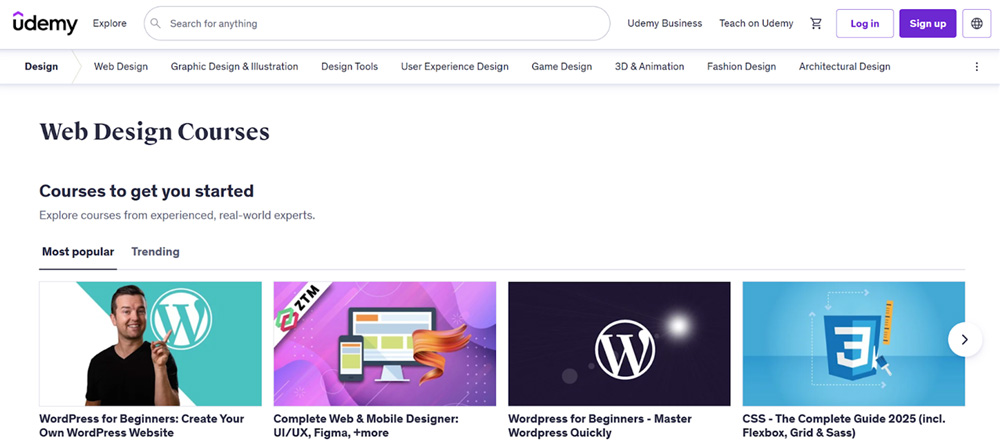
Image Source: Udemy.com
If you look for web design courses, you will find many options that teach users about WordPress, Photoshop and HTML or CSS. To narrow down the search, you can filter them by popularity, rating, or price.
Important features:
- Lifetime access to purchased courses, which means you can learn at your own pace.
- Ongoing sales offers allow you to buy top-rated courses for a fraction of the price. During the seasonal sales, you can get courses for as low as $15.
- Courses are taught by experienced developers and industry leaders. While most courses are paid, the platform also has a free resource center where you can find free certifications as well.
Example of Use Case:
Developers can sign up for “Web Developer Bootcamp” by Colt Steele at Udemy, which is one of the most popular courses on the platform. It covers front-end and back-end development, which teaches developers how to create a fully functional web application from scratch.
For organizations building internal training programs, AI course creator tools can help you develop custom web development courses for your team. You can transform existing PowerPoint presentations into interactive elearning modules or use AI to generate course content from scratch, making it easier to scale training across your organization.
5. Coursera
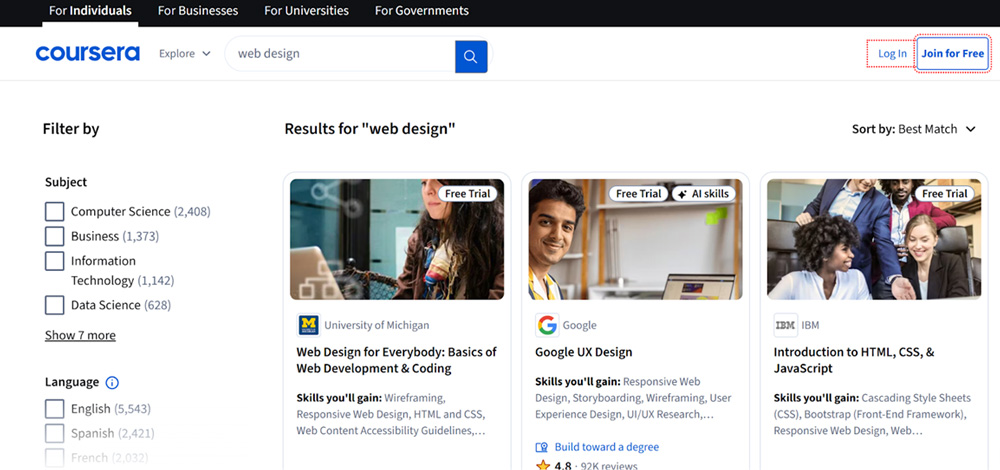
Image Source: Coursera.org
Important features:
- Globally recognized certificates and courses, and specialization in web development, UX design, and full-stack development.
- Coursera has an option where you can audit courses for free and get a certification.
- You can easily choose a web design guide on UI/UX, full-stack development or Wix to create a platform for your business or startup.
Example of Use Case:
If you are a passionate developer who wants to make a career in web development, then Meta Front-End Developer Professional Certificate by Coursera can be a useful course for you. It covers all the basics and necessary topics for front-end development roles, with modules on React, CSS grid, and Git.
6. Flux Academy
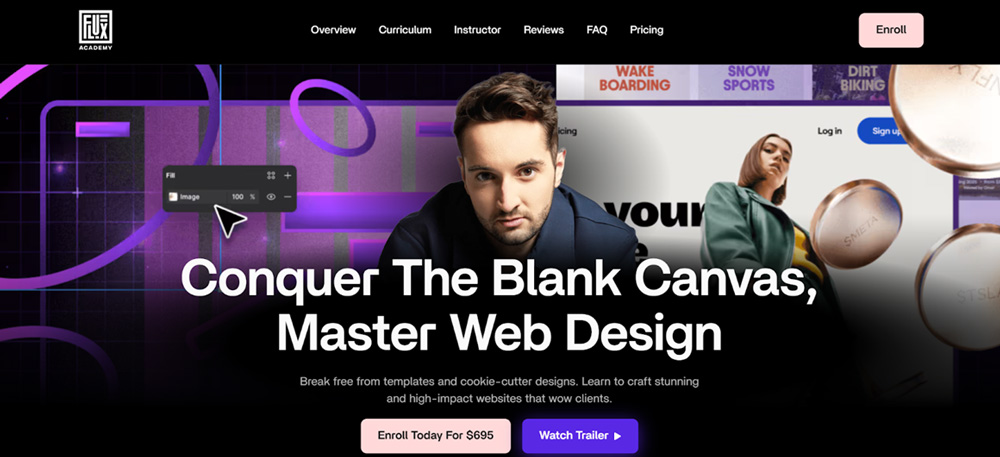
Image Source: Flux Academy.com
Important Features:
- Flux Academy has design courses that mainly focus on user experience (UX) and conversion optimization.
- Gives you real-world projects and problems to solve along with each course.
- Access to a community of designers and developers that helps people share ideas and collaborate on projects.
Example of Use Case:
A freelance developer can use courses from Flux Academy to master Webflow e-commerce sites for small businesses. The developers learn how to build a website and how to adapt it for high conversions.
7. Treehouse
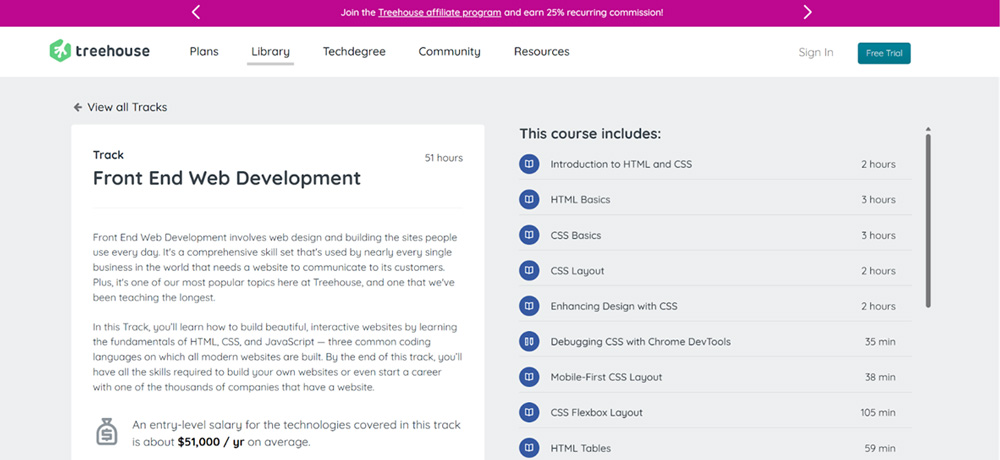
Image Source: Treehouse.com
Important features:
- Treehouse has a “Techdegree” program designed for job-seeking developers.
- Other courses include front-end, back-end and full-stack development.
- Treehouse hosts interactive coding challenges where enrolled developers can participate. It also offers an open discussion platform where people can share their coding journeys and just make friends.
Example of Use Case:
A student who wants to pursue a career as a junior front-end developer can complete the Front-End Web Development Techdegree. This course comes with lots of portfolio-building projects, such as interactive photo galleries and a responsive landing page.
8. OpenClassrooms
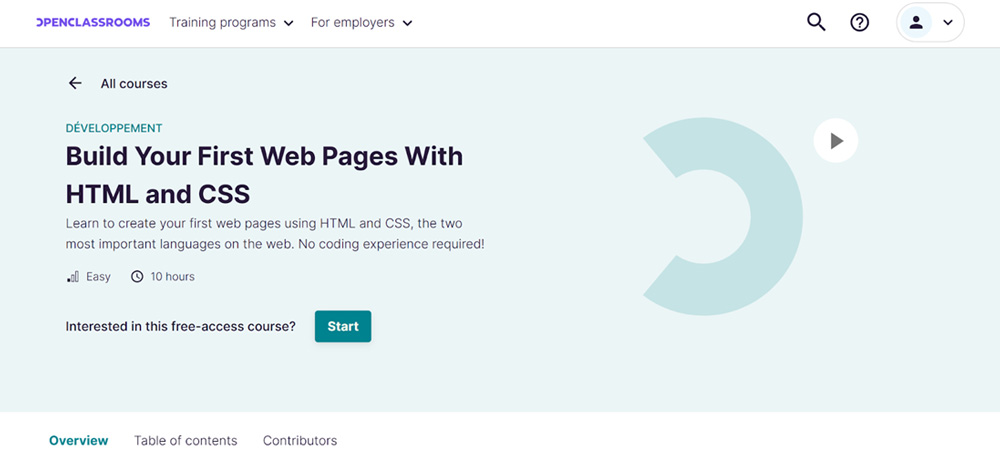
Image Source: OpenClassrooms.com
Important features:
- Open Classrooms has one-to-one mentor sessions for developers.
- The platform offers career coaching and portfolio reviews to developers who are ready to step into the job market.
- Project-based courses that follow the real development scenarios and problem solving quizzes.
Example of Use Case:
Developers can complete the Full-Stack program in OpenClassrooms. By the end of the course, they can create real iOS apps or Android apps with built-in checklist panels and data dashboards. They can also get feedback from experienced developers who are enrolled on the platform.
9. Frontend Masters

Image Source: Frontend Masters.com
Important features:
- Courses are taught by open source contributors, which means people with the right skills and expertise will be offering real-world insights.
- Frontend Masters has more in-depth lessons than other platforms on our list. Mostly focusing on advanced frameworks and modern JavaScript features.
- The platform also has downloadable resources and code challenges for more engaged learning.
Example of Use Case:
A front-end developer can use Frontend Masters to learn React, about state management units and JS libraries like Redux and performance optimization used in large-scale projects.
10. Envato Tuts+

Image Source: Envato Tuts+
This tool is useful for web designers, and offers modern web development courses like creating a website using AI, WordPress optimization and developing a Shopify store for your small business.
Important features:
- Thoroughly explained video tutorials on WordPress, interactive UX/UI techniques, CSS animation and responsive web design.
- Developers can also get full access to Envato Elements, which has all the themes and code snippets available.
- This platform is perfect for beginners and pros who want to learn design and development together, for both beginners and professionals.
Example of Use Case:
Freelancers can learn how to create a JavaScript AJAX Post Request, which helps them update content on a website in real time as the user interacts with your site.
Bonus Mentions:
11. MDN Web Docs

Image Source: MDN Web Docs
Important features:
- The platform provides comprehensive documentation for HTML, CSS and JavaScript API for both learning and creating real code.
- Also gives you detailed browser compatibility tables along with example scenarios for better understanding.
- MDN has resources like a curriculum that covers all the essential skills for front-end developers, like Semantic HTML, CSS Styling, and JavaScript.
Example of Use Case:
A developer working on a new project can use the JavaScript API documentation of MDN to ensure that their codes work in different browsers. They can run their code in the “Playground” tool, where they can write and run code in real time.
12. Pluralsight

Image Source: Pluralsight.com
Important features:
- It offers video series on different topics from beginner to advanced levels that cover Azure, Python, frameworks, safety and cloud integration.
- It also offers charts for skill evaluation so you can measure growth and progress.
- Pluralsight has the Technically Possible Podcast that covers advanced topics in a detailed conversational style format.
Example of Use Case:
A senior developer can use Pluralsight to learn server-side rendering in React for large projects or learn about cloud computing, which will help them create frameworks for modern apps.
13. GeeksforGeeks

Image Source: Geeksforgeeks.org
Important features:
- They offer live classes on full-stack development covering both Node.js and React.
- They also have practice DSA exercises, including popular coding problems. The problems range from three levels of difficulty: easy, medium, and hard, so that newbies and advanced developers can practice based on their skills.
- Developers can also learn about operating systems like Linux. This is especially useful for individuals who want to pursue a career as system administrators and DevOps professionals.
Example of Use Case:
A student who is preparing for the front-end developer interview can use GeeksforGeeks to strengthen their skills to solve problems. They can also practice by participating in challenges like the Indexes of Subarray Sum or the Perfect Sum Problem.
To Wrap Up
By choosing the right learning platform, you can save yourself from watching endless training courses and actually create your dream web or app project. These 10 online learning platforms, plus our bonus mentions, cover the whole gist of web development, from building a strong foundation with coding to advanced frameworks, design principles and more.
Each site provides a unique purpose; some offer structured courses, others give you hands-on coding challenges and expert insights. Together, they cover all the angles of website development, so you can learn at your own pace, anywhere in the world.
If you are thinking about designing a modern business website or creating an ecommerce store for your small business, just search for the right course and choose a suitable option.
Remember, learning code is not enough to stand out in the competitive industry like this; so keep implementing new skills and tools and adapt as you hone your skill set and explore new technologies.